Showing posts with label Mortgage. Show all posts

First time buying a home? Avoid these 4 pitfalls

Buying a home and taking out a mortgage is a complex process with major financial and emotional consequences.

All buyers are subject to certain critical mortgage mistakes, including the five biggest ones we recently highlighted.

But there are particular pitfalls you should maneuver around if this is your first time buying a home.

Avoid these mistakes, and you'll save yourself some heartache, if not time and money, too.

Mistake 1. Succumbing to false pressure.

First-time home buyers often set arbitrary deadlines for buying a home, like "before the wedding," "before the baby is born" and "before our lease expires."

But the excitement of meeting your goal will wear off quickly. Then you’ll be left with the day-to-day reality of living in a house that isn’t quite right because you rushed into your purchase.

Getting out of a lease early is less expensive than buying the wrong house. And trying to buy a home while pregnant or planning a wedding adds unneeded challenges to an already stressful time.

Mistake 2. Settling for a home that’s not right for you.

Besides arbitrary deadlines, there are other reasons why first-time buyers may settle for a home that isn’t right for them.

The desire to buy a home is so great, and the fear of failure is so high, that buyers will often buy a house that works instead of one that is truly right for them, says mortgage broker Todd Huettner of Huettner Capital in Denver, Colo.

"The results can be costly," he says.

You might think you’ve found the best option in your price range because everything you’ve seen so far is junk. Or you might feel rushed by the fear the real estate or mortgage markets will suddenly change and price you out.

If you can’t shake your impatience, there is a way to minimize the potential damage.

"The key is not to buy a house with a fatal flaw," says Michael F. Levy, principal broker of Grand Lux Realty in Armonk, N.Y.

Avoid any home that is next to a highway or railroad tracks, has road noise or is on a double yellow line street, is in a bad school district, or doesn’t have a flat, usable backyard, he says.

"If the house doesn’t have a fatal flaw, and the buyer hasn’t overpaid for it, they should be able to sell it again and find something better," he says.

Mistake 3. Being afraid to back out.

After investing countless hours shopping, then paying for a home inspection and putting down earnest money, first-time buyers may be afraid to walk away when they finally have a home under contract.

"People will overlook big problems if they think it is the only house for them," Huettner says.

Whether you don’t like something in the home inspection report, or you’re second-guessing how much you can afford to pay, if you have doubts, step back and reevaluate your purchase, says Erica Ramus, broker/owner of Ramus Realty Group in Schuylkill County, Pa.

"Backing out and losing your deposit — for any reason — can be cheaper and less traumatic in the end than buying the wrong house or buying a house that is wrong for any reason at all," she says.

If you see something on the inspection report that causes alarm, contact an expert to get the full scope of any problems, says Mike Canning, vice president of Delaware-based XONEX Relocation. A pro can help you decide which home inspection problems mean it’s time to walk away and which are minor fixes.

Mistake 4. Trying to time the market.

It’s natural to question when it's the best time to buy after so many people have been seriously burned by the housing market over the last decade.

But with home prices still depressed and mortgage rates as low as they've ever been, waiting longer now makes little sense for most buyers.

"Unless you are an investor looking to quickly flip a home for profit, your timing should only be dependent on your own circumstances," Canning says. "If home value is dropping when you purchase, then you are getting a bargain from where it was. If the market is improving, you are getting it today at a bargain as compared to tomorrow."
Read More

Upshot of the Foreclosure Backlog

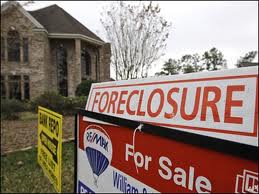
FORECLOSURES are taking significantly longer in states where lenders must go through the courts, and the delay may or may not be good for borrowers, depending on their circumstances. But some researchers say that dragging the process out hurts society at large.

Upshot of the Foreclosure Backlog


About half of the 50 states have judicial foreclosure systems. The housing market crash so bogged down the systems in New York and New Jersey that foreclosures there have routinely dragged on for two or three years; their timelines are among the longest in the country. The national average, which factors in nonjudicial states, is about one year, according to RealtyTrac, which monitors foreclosures nationwide.

The sluggish process has caused a backlog of loans in foreclosure and is slowing the housing market recovery in judicial states, says Michael Fratantoni, the vice president for research and economics at the Mortgage Bankers Association. As of the end of the third quarter, according to the association, 6.6 percent of all loans were in foreclosure in judicial states, compared with 2.4 percent in nonjudicial states.

A study released last summer by researchers at the Federal Reserve Banks in Boston and Atlanta found that the longer properties languish in delinquency or under a bank’s ownership, the greater the negative effect on the value of surrounding properties.

“The best outcome is to prevent the foreclosure,” said Paul S. Willen, an economist and policy adviser at the Boston Fed. “But if it’s clear that can’t be done, it’s in society’s interest to get the foreclosure done as soon as possible.”

In a separate study last year, Mr. Willen and his colleagues question the basis for giving borrowers more time to try to fix mortgage problems. The study found that avoiding foreclosure was no more likely for borrowers subject to either judicial foreclosure, or laws forcing lenders to wait 90 days before beginning foreclosure proceedings, than it was for other borrowers.

Consumer advocates agree that foreclosures are taking too long in some states. High concentrations of vacant properties have taken a heavy toll on certain neighborhoods, said Michael D. Calhoun, the president of the Center for Responsible Lending in Washington. “We agree that borrowers should be considered quickly for loan modifications,” he said. “They’re more successful if they’re done early on.”

But in his estimation, the delays aren’t a result of the protections provided to consumers under the judicial process, because the court process has worked fine in “normal times.” The problem now, he said, lies with the mortgage servicers. “We had a servicing system that was totally overwhelmed by the housing boom and even more so by the housing crash,” Mr. Calhoun said. “The backlog is due to servicer errors and lack of capacity.”

Communication gaps are also a factor, says Mark S. Cherry, a lawyer who represents borrowers in the state-sponsored foreclosure mediation program in New Jersey. His clients must sometimes return to mediation sessions five or six times before finally getting a loan modification. “Persistence breaks resistance,” he said.

Courts, too, have been overwhelmed. In New Jersey, a typical year brings about 24,000 residential foreclosure filings; in 2009 and 2010, annual filings surpassed 60,000.

The courts have since had time to adjust, especially because lenders have halted the processing of thousands of old cases while they work with federal regulators on improving their practices, said Kevin M. Wolfe, the assistant director of the Civil Practice Division of New Jersey’s Administrative Office of the Courts.

New foreclosure cases are moving much more quickly, and there is no backlog, Mr. Wolfe said. The average time for foreclosures filed this year is 6.4 months.

By the time lenders begin processing those old cases, the court should be far better prepared, he said, adding, “We’re not going to be caught up short this time.”
Read More

Is This A Good Time To Take A Fixed-Rate Reverse Mortgage?

Is This A Good Time To Take A Fixed-Rate Reverse Mortgage?
Despite what you may have seen in the media, now is a great time for homeowners over 62 to take a government-insured reverse mortgage, officially known as a Home Equity Conversion Mortgage (HECM). Designed, administered and insured by the Federal Housing Administration, HECM reverse mortgages can meet a wide spectrum of needs for homeowners 62 or older with substantial equity in their homes -- house repairs, grandchildren's educations, travel or, at the most fundamental level, having enough money to live comfortably while remaining at home. A 2007 AARP survey found satisfaction rates higher than 90 percent among homeowners with HECMs.

Under U.S. Department of Housing and Urban Development (HUD) rules, HECM participants can withdraw a portion of their home equity in one lump sum, an equity line of credit, or various forms of monthly annuities. They make no payments while they live in their home unless they elect to. The money loaned plus interest and origination fees becomes due only when HECM participants move or die and their home is sold. To add a safety buffer, homeowners considering a government-insured reverse mortgage meet with an FHA-approved counselor to fully understand the program's ramifications.

That sounds pretty good, and it is. And yet, The New York Times recently published a widely-read, alarming, and in my view misleading story on FHA-insured mortgages ominously headlined, "A Risky Lifeline for the Elderly is Costing Some Their Homes." The focus of the story was two widows facing eviction from homes on which HECM reverse mortgages had been taken, after their husbands died. The reader could easily infer that subprime-style trickery was to blame, but, in fact, there was no trickery at all: the widows in The Times story were not on their homes' HECM agreements, so they were obliged to pay off the loan or move when their husbands died. Had they signed the HECMs along with their spouses, they could have remained in their homes with no payments required. With due respect to a grand institution, The Times got this one wrong. If publicity like this scares older homeowners away from a solid, useful financial resource, that will be a public disservice.

Given the events of the past five years, it's understandable that non-experts might be leery of anything having to do with mortgages. But for qualifying seniors, now really is a great time to consider a government-insured reverse mortgage, and here's why: Seniors can get more money out of their homes now then they will when interest rates, now at historic lows, begin to rise again.

The amount older homeowners can draw from their homes is determined by their ages, the assessed value of their home, its rate of value appreciation and the HECM interest rate. In calculating withdrawable amounts, HUD assumes an unchanging fixed appreciation rate of 4 percent a year and a market interest rate on which it has set a floor of 5 percent. When the market rate rises above the 5 percent floor, as it will at some point, the "draw" homeowners can take from their homes will diminish.

That even The New York Times could get it wrong on HECMs underscores an important point. Seniors should understand all the options available on FHA-insured reverse mortgages, and how these might or might not meet their needs, before contacting a lender -- because the interest of lenders is not completely aligned with that of borrowers. Lenders make more money when borrowers select cash withdrawals than when they select credit lines or annuities, whereas most seniors do better with credit lines or annuities.

Until recently, there was no place for borrowers to go for this information. The calculators on lender web sites and on HUD's web site do not provide comparative information on the different options. While the counselors that borrowers are required to consult before they sign on with a lender are unbiased and neutral, borrowers see them only after they select a lender, and the counselors are barred from expressing a preference about loan options.

But borrowers can now find what they need on my site -- a set of 10 inter-related calculators that provide comparative data on 10 reverse mortgage options and combinations of options. This includes the future status of the transaction, including outstanding debt and unused credit line, every year until the homeowner reaches age 100.

Properly armed with a firm understanding of the reverse mortgage option that best meets their needs, homeowners 62 or older who have earned substantial equity in their homes can benefit richly from government-insured reverse mortgages. They and their loved ones owe it to themselves to investigate the possibilities without fear.
Read More

Fed’s latest stimulus may have little impact on mortgage borrowers

Fed’s latest stimulus may have little impact on mortgage borrowers
The Federal Reserve took aim at the nation’s wobbly housing market last week with its biggest stimulus action in two years, but that firepower is doing little to lower mortgage rates or make home loans more available for Americans.

Instead, banks are set to see a windfall since the Fed’s actions will immediately lower the cost of issuing loans. It may take months or longer for benefits to trickle down to consumers, analysts say.

The emerging scenario highlights the limitations of the Fed’s ability to jump-start the housing market on demand: Rather than intervene directly with consumers, the Fed must rely on banks, brokers and other industry actors to offer borrowers better terms.

Banks say they are keeping rates high right now because lowering them any further would overwhelm them with customers. They say that over time, as volume thins out, rates could come down to attract new borrowers.

“Bank of America, Wells, Chase, whomever, have fixed capacity. You can’t take in more loans than you can handle,” said Matt Vernon, a senior mortgage executive at Bank of America.

Critics argue that banks are simply maximizing profits at the expense of consumers. Mortgage bankers are recording higher gains from home loans as the gap widens between the interest rate they charge consumers and the rate they must pay investors who finance the loans by buying mortgage securities.

Another challenge for the Fed is that many people eager to buy a home or refinance an existing mortgage simply can’t qualify because of poor credit histories. That may not change even if rates fall.

People “are seeing a dangling low fruit, but they just cannot reach it,” said Lawrence Yun, chief economist for the National Association of Realtors.

At a news conference last Thursday following the announcement that the Fed would begin buying $40 billion worth of mortgage bonds per month, Fed Chairman Ben S. Bernanke faced several questions about the significance of the central bank’s actions to the housing market.

Bernanke said that the initiative should “provide further support for the housing sector by encouraging home purchases and refinancing.” The chairman said “housing is usually a big part of the recovery process” but has been “one of the missing pistons in the engine.”

Yun said he believes the Fed was right to focus its latest round of stimulus at the long-suffering housing market, but it remains far from certain that the action will have meaningful impact.

Rates are already at generational lows, he said. Pushing them lower might spur some additional refinancing, but Yun said it is unlikely to create a new wave of home buyers.

Mortgage Bankers Association chief executive David Stevens expects even the refinancing boom to “burn out” since everyone who could qualify for a lower mortgage will have refinanced already.

To move that process along, banks are ramping up. Bank of America has added more than 800 people to its mortgage lending team to keep pace with refinancing applications. Vernon, the mortgage executive, said that as banks continue to work through backlogs of loans more quickly, they should begin offering consumers lower rates.

Once the refinancing activity dies out, demand for new homes will climb as borrowers gain confidence in the market, analysts say. The Mortgage Bankers Association is forecasting that loans used to purchase homes could increase by 20 to 25 percent.

Some regions of the country, which experienced only moderate price declines, are seeing a dearth of desirable homes for sale. Lower interest rates, therefore, may have little effect on boosting sales.

In Washington, the number of active listings in June reached a historic low, down 33 percent from a year ago. The result has been a wave of eager but frustrated buyers and a return of bidding wars, escalation clauses and offers to forgo requests for any repairs by sellers.

Wells Fargo senior economist Mark Vitner said he expects the Fed’s actions will give home builders confidence to build new properties in anticipation of demand.

“When Bernanke talked about giving a boost to the housing market, he was really talking about home building,” Vitner said. “Inventories are so low today and sales are growing that I think these actions are really meant to improve buying.”

Indeed, Bernanke said increasing home sales would provide the much-needed boost to the overall economy. “House prices are beginning to rise in some markets, which will encourage people to look at homes, will encourage lenders to make more mortgage loans,” Bernanke said. “So I’m hopeful that we’ll see continued progress in the housing market.”


Loading image. Please wait
Home prices in Georgia's capital rose 4.4 percent in June from May, the most recent month for which data are available. But home prices are down 12.1 percent from the same period last year.


This is the caption of image number 1
This is the caption of image number 2
This is the caption of image number 3
This is the caption of image number 4
This is the caption of image number 5
This is the caption of image number 6
This is the caption of image number 7
This is the caption of image number 8


Read More

The Political Damage Caused by Foreclosures


The Political Damage Caused by Foreclosures
The negative impact of the foreclosure epidemic in the United States has struck communities in many aspects. Local economies have been devastated and families have been forced to make deep adjustments in the wake of losing their homes, and it was only a matter of time before foreclosures affected the American political machine. According to a recent report by NPR, the voter databases used in the run-up to the 2008 election have been radically changed by the massive loss of homes.


The 2008 election year also marked the beginning of the foreclosure avalanche and the global financial crisis. The states where homeowners have been the most affected by foreclosures also happen to be key battleground states for presidential candidates. In fact, Florida, Nevada and Ohio currently boast the highest rates of foreclosure.

Canvassing Made Difficult in Florida

The Sunshine State is home to 29 electoral votes. It is no surprise that the Republican Convention recently took place in Tampa, as Florida is home to a considerable GOP voter base, but President Obama has a strong African-American and Latino constituency in the state.

The rate of judicial eviction orders caused by foreclosures in Central Florida counties is so high that voter outreach groups are waiting until later to go door-to-door. Voter registration campaigns are actually may actually take place in the parking lots of supermarkets and discount stores in this region.

Finding Voters in Ohio

Canvassers are also having a hard time in large cities like Cleveland and Columbus, where almost 11,000 homes have been lost to foreclosure in 2012. Voter outreach groups estimate that 26 percent of voters who registered in Cleveland for the 2008 election will not be found very easily. That’s nearly 99,000 voters in a region that was instrumental in giving Obama a victory in the polls.

Virtual Ghost Towns in Nevada

Foreclosures have deeply changed the suburban landscape of the Silver State since 2007. The problem in Nevada is that many former homeowners decided to leave the state altogether in search of greener pastures. Door-to-door canvassers are finding entire blocks desolated.

Nevada presents a greater challenge than Florida and Ohio. Political campaign experts believe that the key to winning Nevada is to register newcomers who have arrived looking for rock-bottom real estate deals. These home shoppers are likely to vote with housing in mind, and in this regard President Obama may have an edge thanks to the various federal foreclosure prevention programs available to troubled borrowers, although Mitt Romney doubts their effectiveness.

Read More